Table of Contents
Planning a wedding reception in Australia and torn between a DJ and a live band? Here’s the short answer: a DJ typically needs a small footprint with one or two powered speakers, a mixer, and reliable power, while a live band requires a proper stage area, multiple microphones, a mixing desk, monitors, and significantly more power circuits. Sorting out your wedding entertainment AV before you sign your venue contract can save you thousands in last-minute hire fees and prevent technical headaches on the night.
The choice shapes more than the soundtrack. It dictates how much floor space disappears, how long the room is tied up during setup, and whether your venue’s wiring can cope. Couples who sort this out early walk into their reception knowing the gear fits the room. Couples who leave it late often find out at the eleventh hour that the function space can’t power a full band, or that the loading dock closes before the drummer arrives.
Bring Your Event to Life
From live events to permanent AV installations, we deliver reliable, high-quality solutions tailored to your needs. Contact our team today for a customised quote.
What a DJ Actually Needs at Your Venue
DJs travel light compared to bands, but that doesn’t mean you can plug them into any old power point and call it done. A standard wedding DJ setup includes a controller, laptop, two powered speakers on stands, a subwoofer for dance floor punch, and a wireless microphone for speeches. When you’re comparing DJ sound system hire across Australia, most quotes assume this baseline rig, so check exactly what’s included before you book.
Space-wise, most DJs need a 2m x 1m booth area. Power requirements are modest, usually one or two 10-amp circuits, though larger receptions over 150 guests may need additional power for extra speakers. Lighting is where things get interesting. Many couples assume the DJ brings full lighting rigs, but unless you’ve specifically booked a package that includes uplighting, dance floor wash, or moving heads, you’ll be staring at a beige function room with overhead downlights killing the mood.
If your venue has low ceilings or pillars blocking sightlines, mention this when booking. The team at Showtime Productions can advise on speaker placement and lighting angles that work around tricky room layouts.
What a Live Band Actually Needs
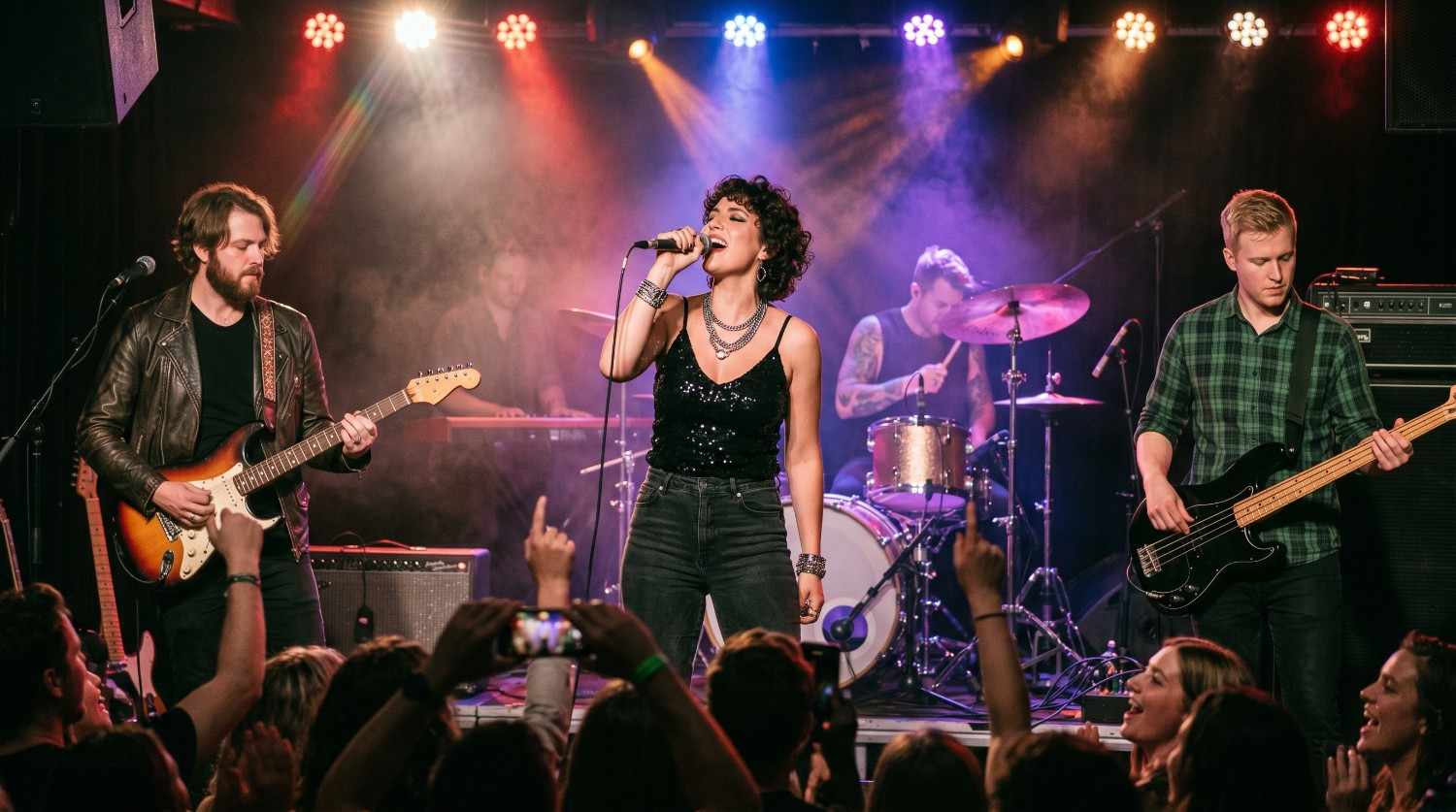
Live bands are a different beast altogether. A wedding band sound system has to handle far more than a DJ rig. A typical four-piece wedding band requires a stage area of at least 4m x 3m, though six-piece showbands often need 5m x 4m. You’ll need power circuits dedicated to backline (amps, keyboards), front-of-house mixing, and stage monitors, usually three to four separate 10-amp circuits at minimum.
Microphones multiply quickly. Vocalists need their own mics, drum kits require overhead and kick mics, and brass or string sections each need their own input. A six-piece band can easily run 12 to 16 channels through the mixing desk. This means a proper wedding PA system rated for the room size, not the small powered speakers a DJ might use.
Bands carry drum kits, guitar amps, keyboard rigs, and cabling, so venues with stairs only, narrow corridors, or distant loading bays add hours to setup time. Check whether your venue allows full sound checks before guests arrive, as some properties with neighbours impose strict noise testing windows.
There’s also the question of where the band eats and waits. A six-piece group plus a sound engineer is seven extra people who need a green room or holding area, and most need feeding during the reception.
Comparing the Two: Quick Reference
Use this reception venue AV checklist when weighing up DJ vs Live Band AV Requirements:
- Power: DJs need 1 to 2 circuits, bands need 3 to 4 minimum.
- Space: DJs need around 2 square metres, bands need 12 to 20 square metres.
- Setup time: DJs typically set up in 60 to 90 minutes, bands need 2 to 3 hours plus sound check.
- Volume control: DJs can easily adjust output, bands have minimum volume thresholds due to drum acoustic levels.
- Speech amplification: Both need wireless microphones for toasts, but band sound engineers can mix speeches through the existing PA.
Not sure which column your venue actually falls into? Send us your venue name and rough guest count, and we’ll tell you within a day whether it can comfortably handle a band, a DJ, or both. No obligation, no quote chasing, just a straight answer before you commit.
Questions to Ask Your Venue Coordinator
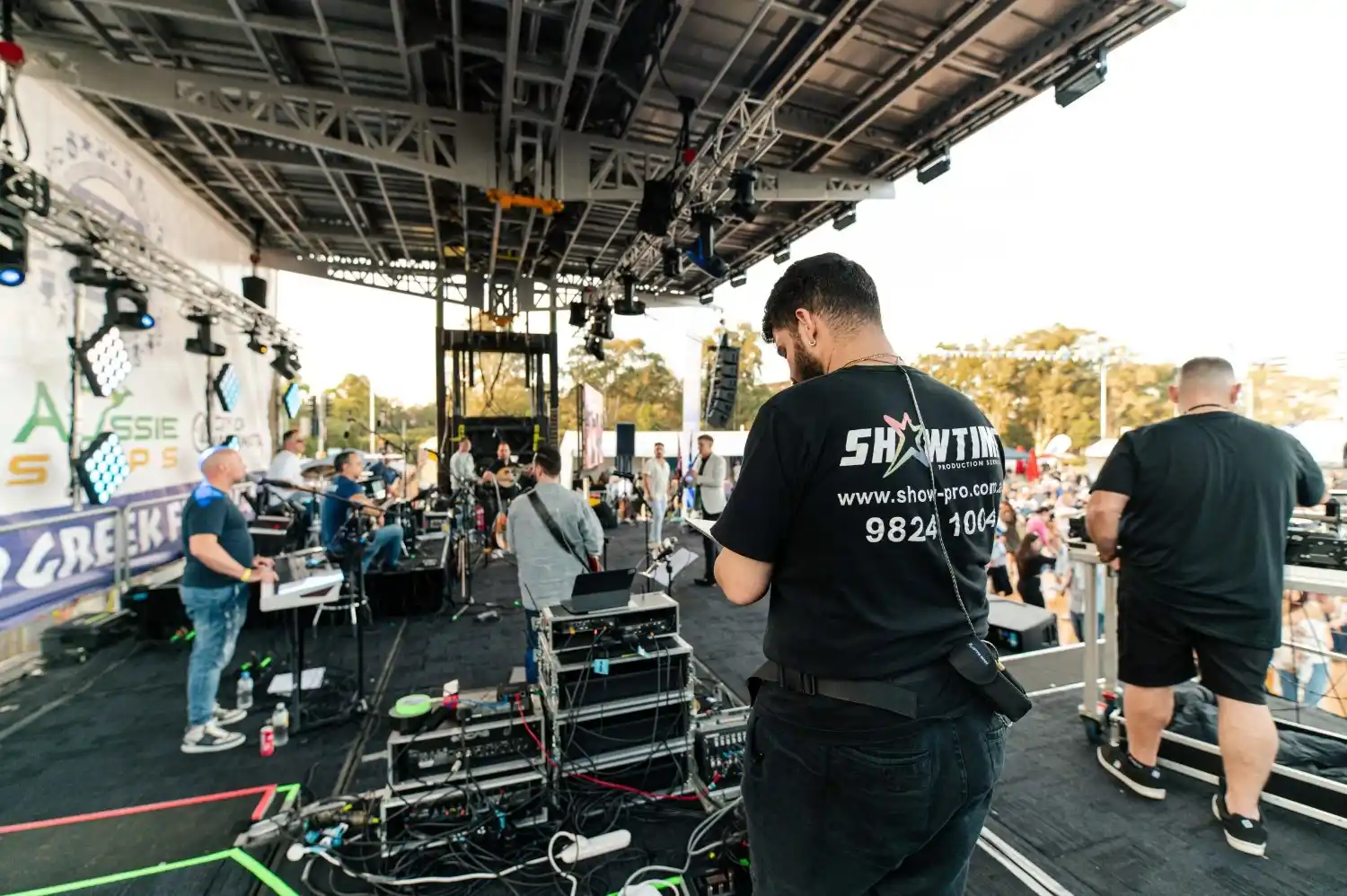
A short conversation with your venue coordinator catches most problems before they reach the dance floor.
- How many dedicated power circuits are available near the stage or DJ area, and what's the amperage?
- Is there a noise limiter fitted, and if so, what's the cut-off level and timing?
- What time does load-in access open, and how far is the loading bay from the reception room?
- Are there stairs, lifts, or narrow doorways between the entrance and the floor?
- Does the venue have an in-house PA, and is it included or charged separately?
A supplier who knows the room in advance plans around its limits instead of discovering them on the day.
Many Australian Venues Have Hidden Limits
Many Australian reception venues, particularly heritage buildings, have power limitations or noise restrictions that affect what’s actually possible. A converted barn might look perfect in photos, then turn out to run the entire room off a single domestic circuit. A heritage-listed hall might ban anything attached to the walls, which rules out certain lighting. Showtime Productions can run a venue audit before your big day to flag any issues while you still have time to adjust.
Hybrid Setups: The Best of Both Worlds
A growing trend among Australian couples is the hybrid approach: a live band for the first dance and high-energy sets, then a DJ for the late-night dance floor. You’ll need shared PA infrastructure, agreed changeover protocols, and clear power planning so neither act trips circuits mid-set.
The changeover is where hybrids live or die. If the band and DJ run separate systems, the gap between sets can stretch to twenty silent minutes while gear is swapped, and a dance floor cools off fast. The cleaner option is a shared front-of-house desk and PA that both acts plug into, with the DJ set up off to the side and ready to take over the moment the band’s last song ends.
Ready to lock in your reception AV without the guesswork? Book a free consultation with Showtime Productions today, and we’ll walk through your venue’s specs, your entertainment choice, and exactly what gear you’ll need on the night.
Let's Create Something Extraordinary
Create unforgettable experiences with professional audio visual, lighting, and production services. Speak with our experts today and bring your vision to life.
Frequently Asked Questions
Do I need to hire a separate sound engineer for my band?
Most professional wedding bands include a sound engineer in their package, but always confirm. Smaller pub-style bands sometimes self-mix from stage, which works in small rooms but struggles in larger spaces.
Can a DJ use the venue's in-house PA system?
Sometimes, but house systems are often designed for background music, not dance floor energy. Check the speaker placement, subwoofer presence, and whether the system handles high-volume output without distortion.
How early should AV be set up before guests arrive?
DJs typically need 90 minutes, bands need 3 hours including sound check. Build this into your venue access agreement.
What about outdoor reception areas?
Outdoor setups need weatherproof gear, generator power if mains isn’t accessible, and significantly more speaker coverage due to sound dispersing in open air. Plan well ahead and have a wet weather backup.
Recommended for You